Before European Expansion
The Chemehuevi Homeland
Long before Wyatt Earp, the aqueduct, or Patton's tanks, the desert and river country around Vidal was home to the Chemehuevi — Nüwüvi, "The People" — the southernmost branch of the Southern Paiute, who knew this land intimately for centuries.
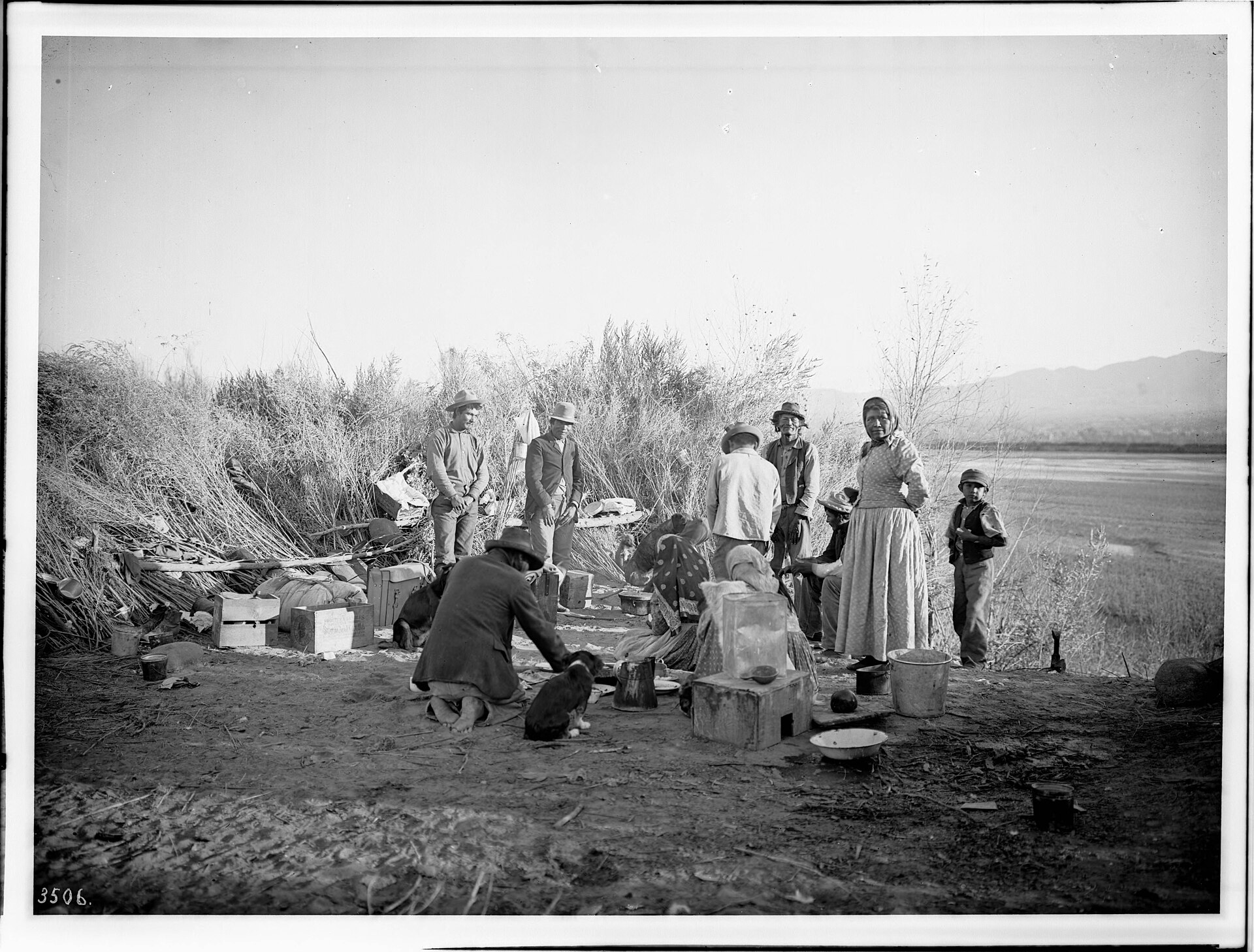
The story of Vidal is usually told through its newcomers — a retired lawman, a water district, an army training for war. But the bare valley between the Whipple Mountains and the Colorado River was a lived-in landscape long before any of them arrived. For centuries it belonged to the Chemehuevi, who call themselves Nüwüvi, "The People" (singular Nüwü). The southernmost branch of the Southern Paiute, they ranged across an immense stretch of the Mojave Desert and the lower Colorado, and the country around Vidal lay near the heart of it.
The Chemehuevi language is a Colorado River Numic tongue of the Uto-Aztecan family, closely related to the speech of the Kawaiisu and the other Southern Paiute. By the account the ethnographer Carobeth Laird set down with her husband George Laird — one of the last Chemehuevi raised entirely in the old ways — their traditional territory reached from the Colorado River west to the Tehachapi Mountains, and from the Las Vegas country and Death Valley south to the San Bernardino and San Gabriel ranges. Within that vast homeland, small family bands moved with the seasons and the water.
The People of the desert
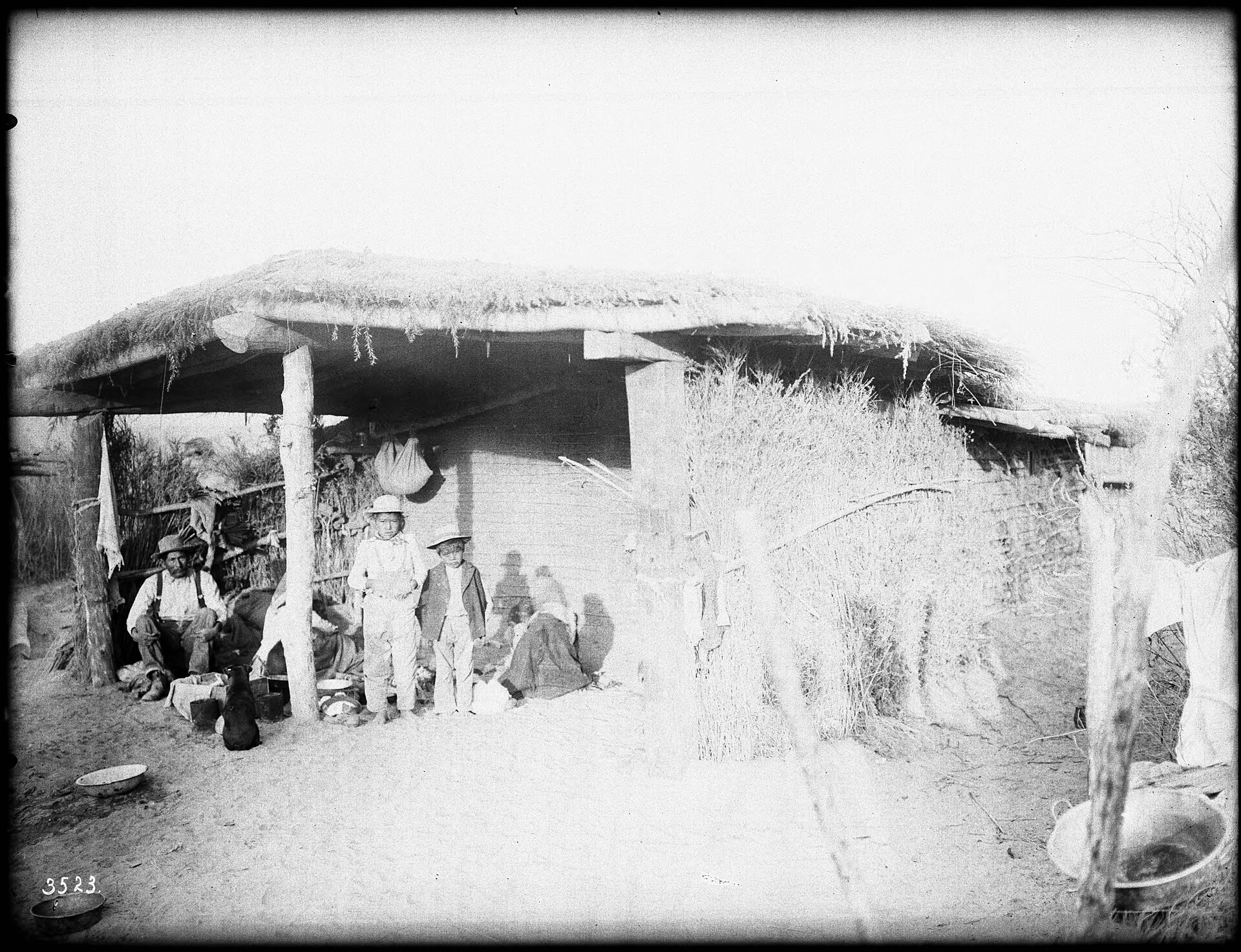
The Chemehuevi were a desert people first, and desert life shaped everything about them. Because the Mojave yields food and water only in scattered pockets, they lived not in large villages but in small, highly mobile groups — sometimes a single family, or even a lone man, traveling and hunting for long stretches far from anyone else. They carried in memory an exact map of their country: every spring, every stand of mesquite, every game trail. Much of that knowledge was preserved in song cycles that named the landmarks of a route in order, so that a singer could "travel" hundreds of miles of desert in his mind.
The Chemehuevi character is made up of polarities which are complementary rather than contradictory. They are loquacious yet capable of silence; gregarious yet so close to the earth that single families or even men alone might live and travel for long periods away from other human beings; proud, yet capable of a gentle self-ridicule.
Carobeth Laird, The Chemehuevis (1976)
Living with the river
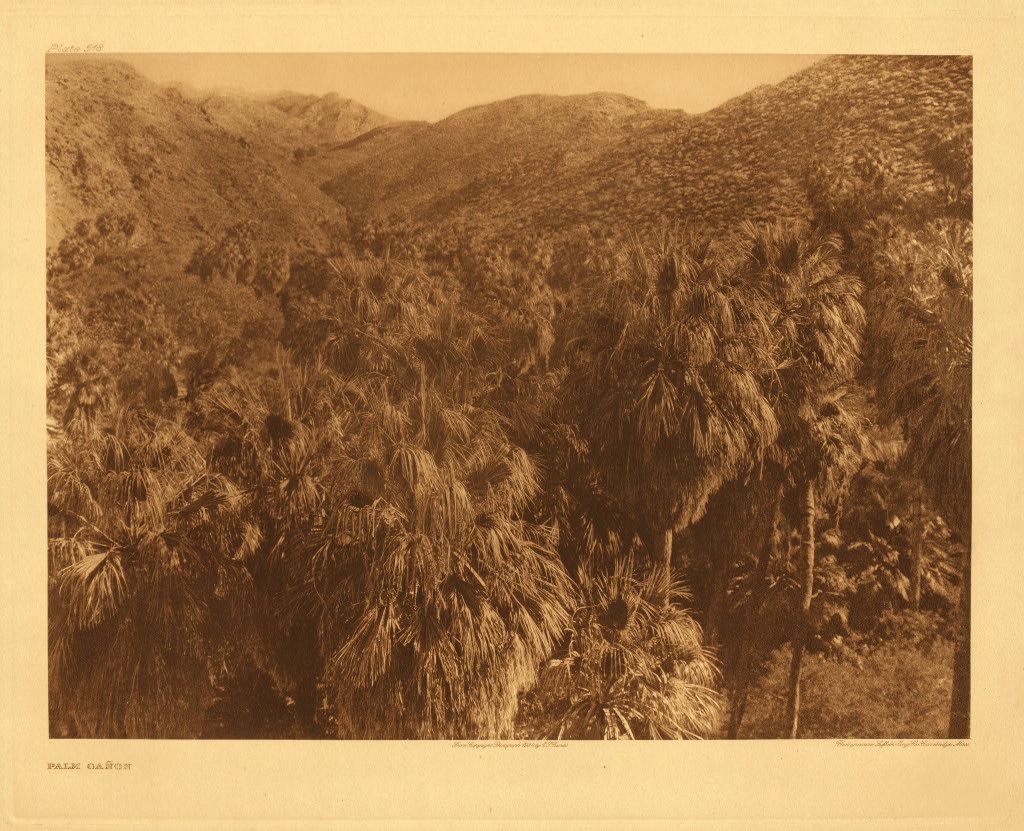
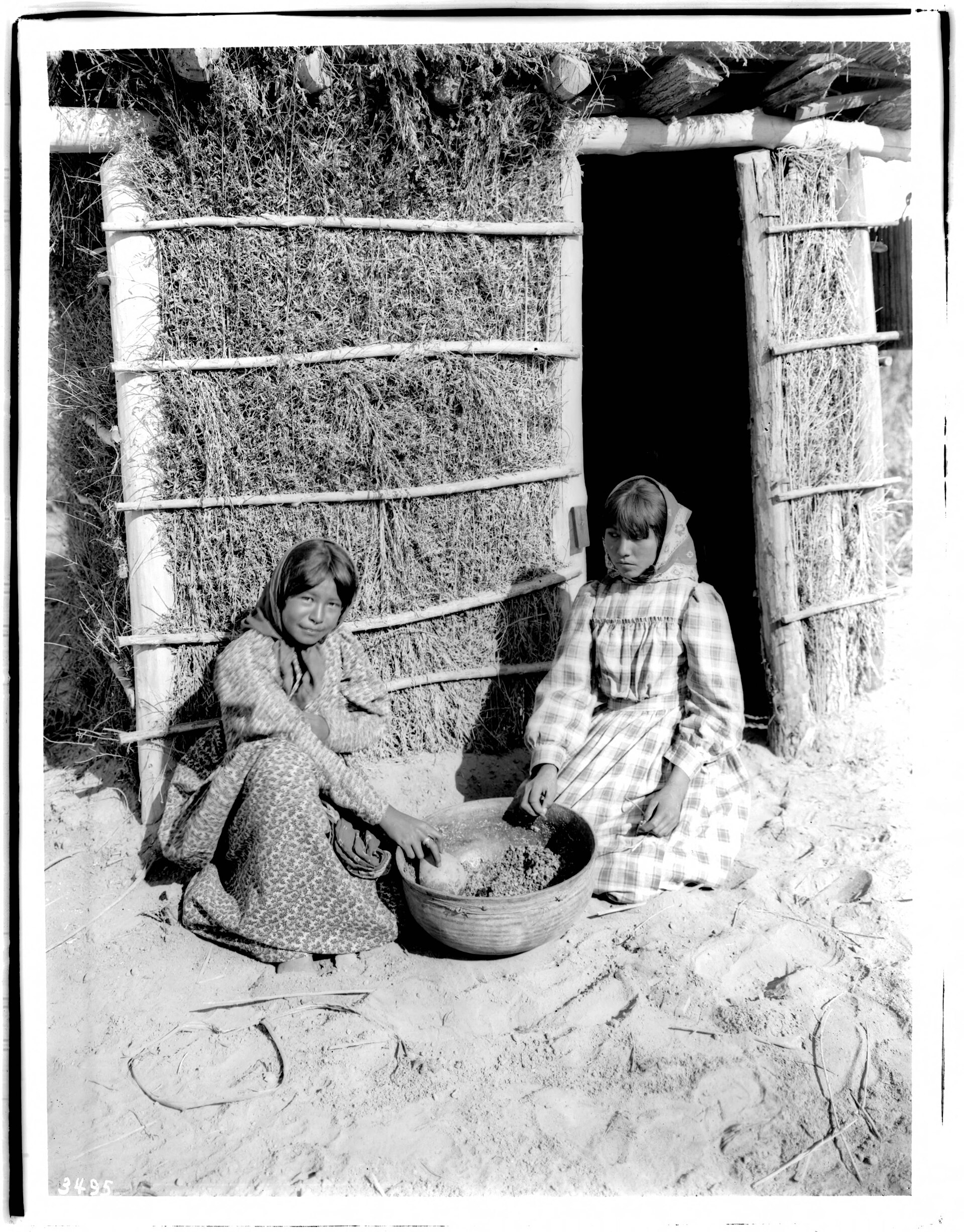
East of the dunes and dry ranges ran the Colorado, and it was to the river that many Chemehuevi turned for a second way of life. Sometime before the middle of the nineteenth century — in part to escape Spanish slave raids reaching up from the south — bands moved down into the Chemehuevi Valley and other bottomlands along the lower Colorado, the same river reach that curves past Vidal. There they took up floodwater farming, planting maize, beans, squash, and melons in the rich silt the spring floods left behind, much as their Mojave neighbors did.
That closeness to the Mojave (Mohave) brought both exchange and friction. The two peoples shared foods, goods, and customs along the river and for long periods lived as allies, but rivalry over the river lands eventually erupted into the Chemehuevi–Mohave War of 1867–1871. In 1865 the federal government set aside the Colorado River Indian Reservation for "Indians of the Colorado River and its tributaries" — first of all the Mohave and Chemehuevi, who had inhabited the area for generations.
Food from a spare land
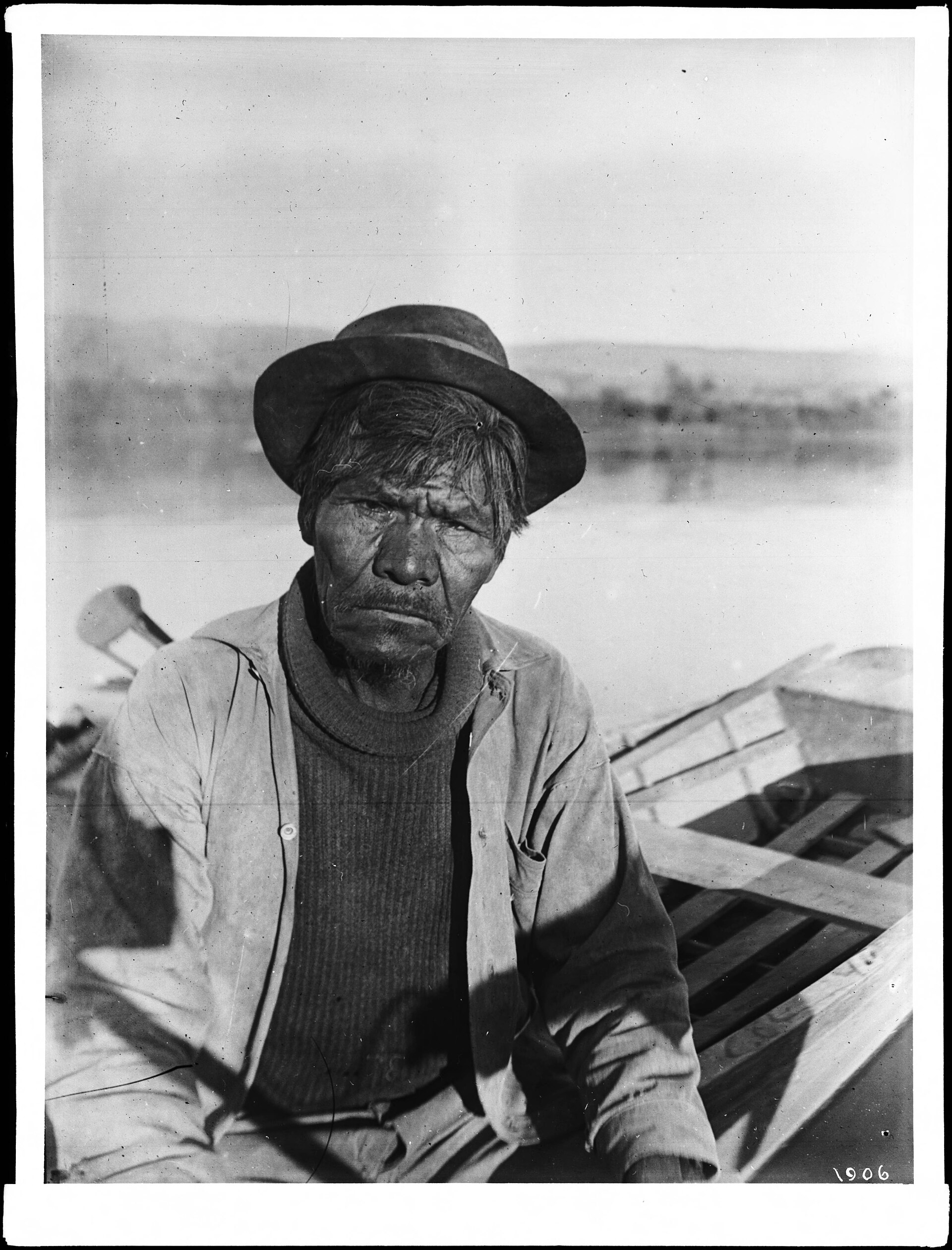
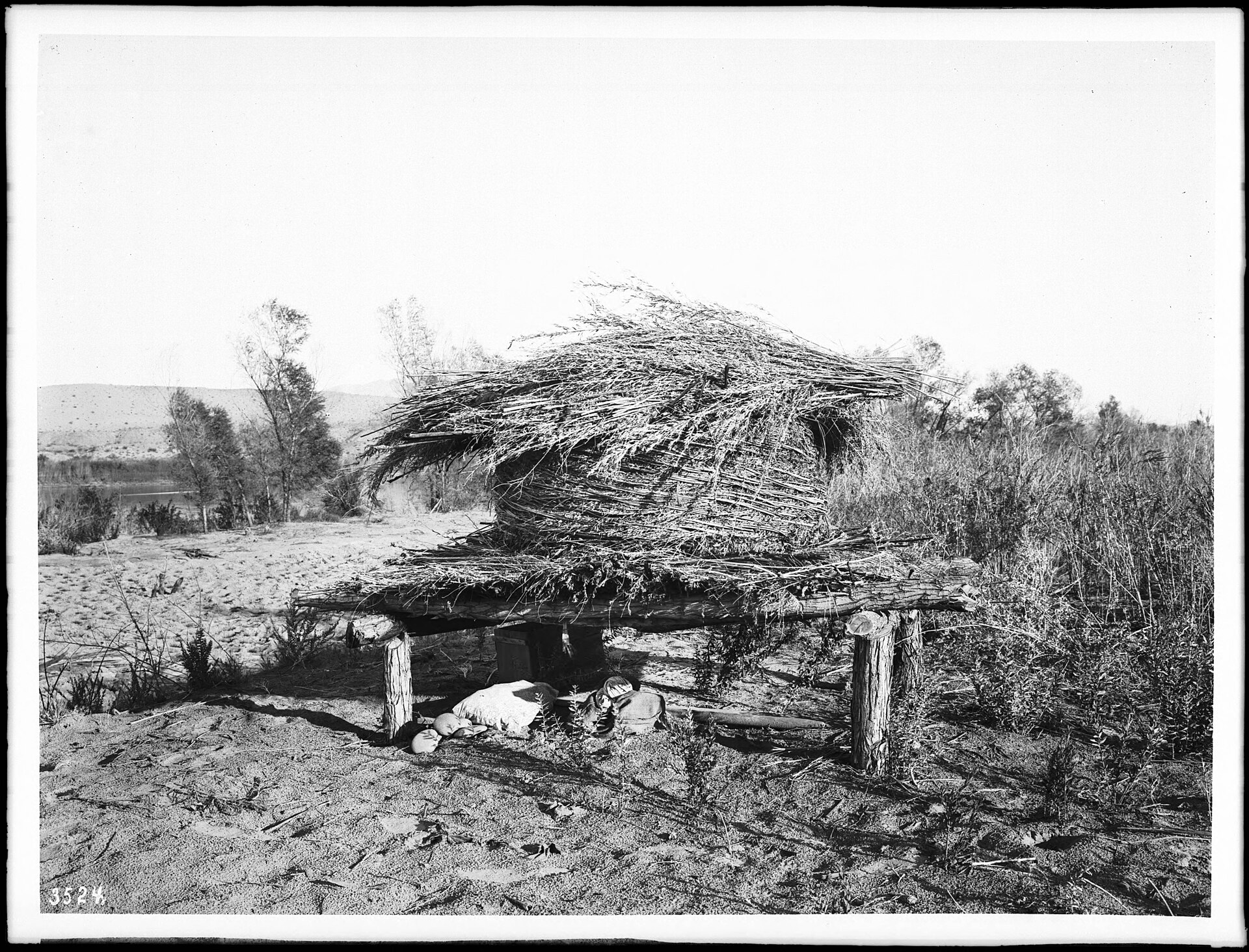
Away from the planted bottoms, the Chemehuevi drew a living from the desert itself. The mesquite was a staple: its sweet pods were ground into meal and stored against lean seasons. In the higher country they gathered pinyon nuts and the roasted hearts of agave, and they hunted rabbits, deer, and desert bighorn — the last taken by specially trained hunters and honored in song. What could not be eaten at once was kept in carefully built granaries of brush and arrowweed, raised off the ground to hold a harvest through the year.
The art of the basket
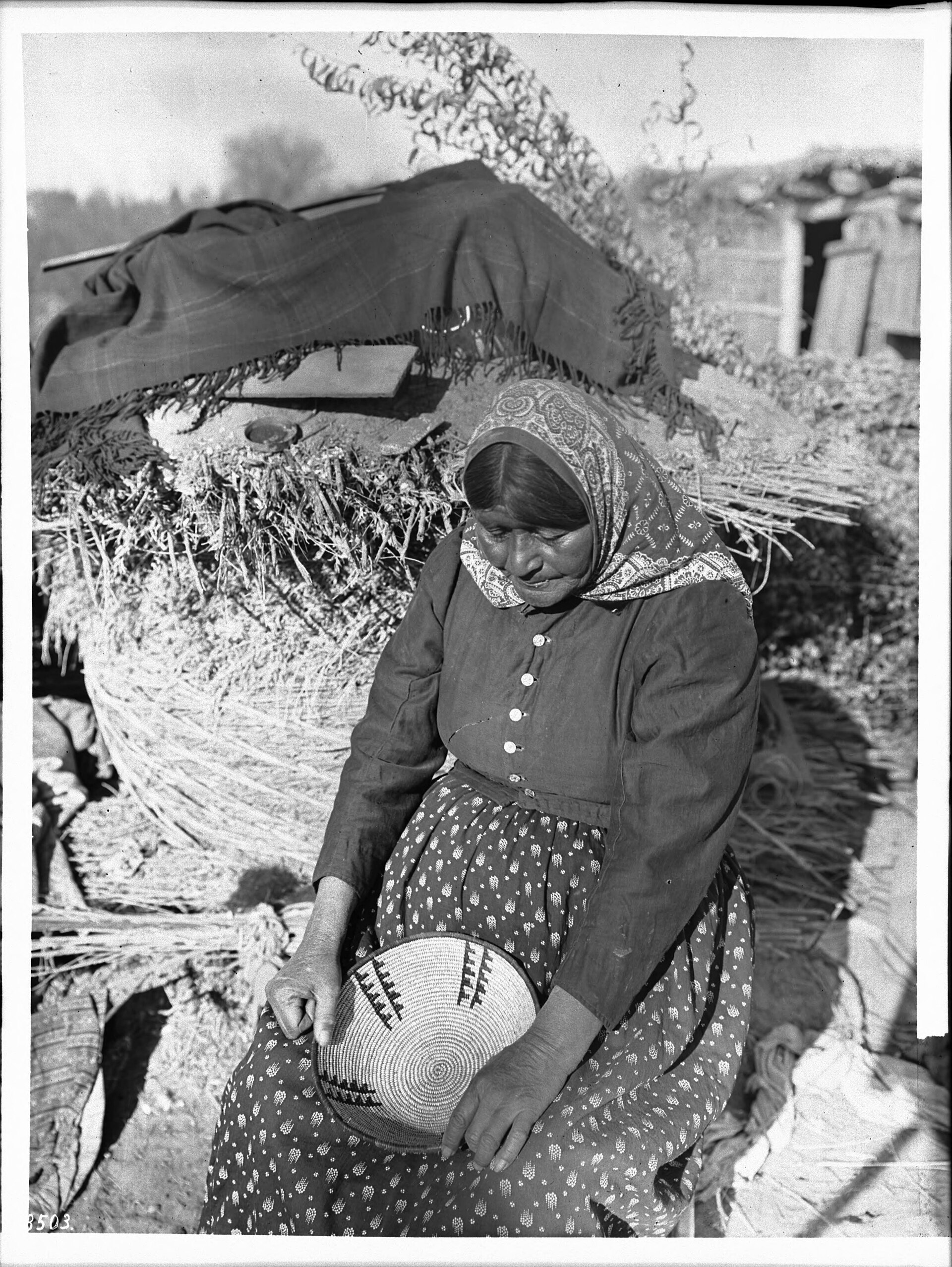
The Chemehuevi are renowned for their basketry, counted among the finest in the Southwest. Weavers coiled their baskets over a three-rod foundation of split willow, working dark patterns with devil's claw and accents of yucca root. The bowls and globular jars they made were both utensils and art — tightly stitched, nearly watertight, and ornamented with designs drawn from the living desert around them. The tradition survived the upheavals of the reservation era and is still carried on by a small circle of weavers today.
A record ten thousand years deep
The Chemehuevi were the People who greeted the first outsiders, but they were the inheritors of a far older desert story. The Vidal country sits where the Sonoran and Mojave deserts meet along the Colorado, a seam that archaeologists have found occupied for as much as ten thousand years. In the deep past, small bands of hunters left behind Lake Mojave and Elko projectile points; later peoples ground hard seeds on stone metates, strung beads of Pacific-coast shell carried inland by trade, and — in the last thousand years or so — made the distinctive buff ware and red-on-buff pottery that archaeologists call Patayan, the ceramic tradition of the lower Colorado. When a cultural-resources survey walked the mesa above the river in 2020, it recorded 53 archaeological sites and 11 isolated finds within about 1,090 acres alone: quiet, scattered proof of how continuously this seemingly empty ground was used.
That survey also set down the ethnographic map of the valley. The Vidal country lies within the ancestral territory of both the Chemehuevi and the Mohave, whose lands centered on the Colorado and reached far to either side of it. The two peoples were bound by trade, intermarriage, and shared ceremony, and by a rivalry that at times turned to war; when the Mohave and Quechan drove the Halchidhoma from the river, it was the Mohave who encouraged the Chemehuevi to settle the newly opened bottomlands. Chemehuevi spiritual life was tied to specific landmarks — peaks, caves, and springs — linked by puha trails, paths that carried spiritual power as well as feet across the desert.
Trails, trade, and a changing world
The Vidal country was never isolated. Chemehuevi runners and traders followed ancient trails across the desert, carrying shell, beads, and goods between the Colorado River and the peoples of the Pacific coast; one band, the Palonies, ranged as far as the country north of Los Angeles. But the nineteenth and twentieth centuries pressed hard on the Nüwüvi. Spanish slave raids, a smallpox epidemic after 1810, the war with the Mohave, and the loss of land to the public domain thinned and scattered them. In 1907 some 36,000 acres of the Chemehuevi Valley were finally set aside for the tribe — only for roughly 8,000 acres of that river bottom to be drowned in the 1930s when Parker Dam backed the Colorado up into Lake Havasu, the very project that would soon turn Vidal into an aqueduct boomtown.
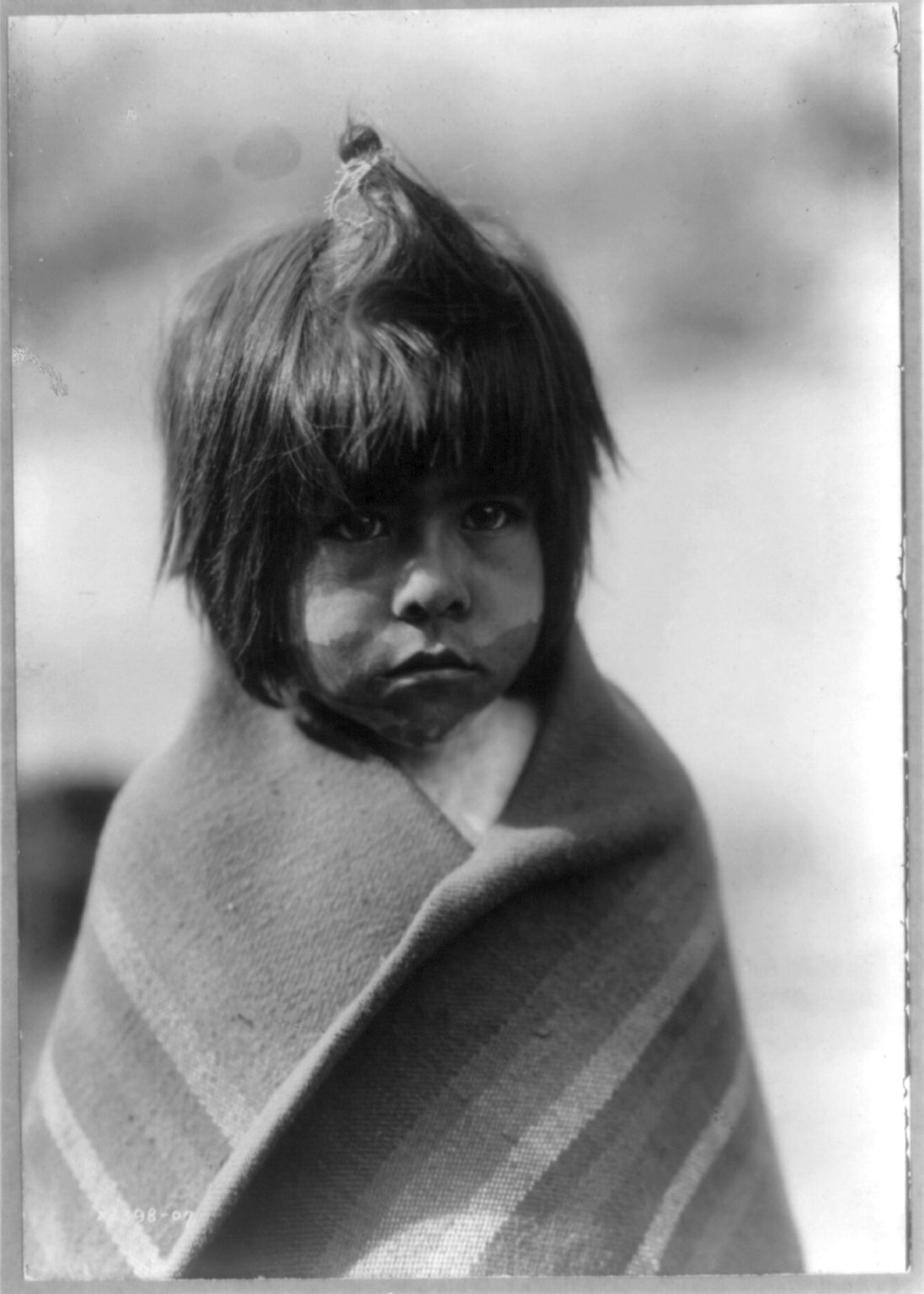
Yet the People did not vanish. Their descendants remain — enrolled in the Chemehuevi Indian Tribe of the Chemehuevi Valley and in the Colorado River Indian Tribes at Parker — and continue working to keep the language and the songs alive. To stand at Vidal today is to stand in the middle of a Nüwüvi homeland far older than any name on the map: a stretch of desert and river that the Chemehuevi hunted, farmed, sang, and traveled for countless generations, and that their descendants carry with them still.
Sources & Further Reading
- Colorado River Indian Tribes — "About the Mohave, Chemehuevi, Hopi and Navajo Tribes."
- FamilySearch — "Chemehuevi Indian Tribe": homeland, population, and historical timeline.
- Chemehuevi Language Project — "Chemehuevi" (language, culture, and history).
- eScholarship, University of California — ethnographic study of the Chemehuevi / Southern Paiute.
- eScholarship, University of California — Chemehuevi / Southern Paiute land and culture.
- National Park Service — Southern Paiute cultural affiliation and curriculum guide.
- Carobeth Laird, The Chemehuevis (Malki Museum Press, 1976) — the standard ethnography of Chemehuevi traditional culture.
- "Chemehuevi," Wikipedia — name, language, territory, bands, and population.