The Standing Record

Buildings of Vidal

4 structures and landmarks that still mark the desert crossroad. Each entry gathers the photographs and film that survive of it — then and now — alongside what is known of its history.

J. M. Heacock Building

Commercial building

The stone-built commercial block at the center of the old townsite — assay office, barbershop, and cowboy showers under one roof.

History

Set on Vidal's Main Street, the J. M. Heacock Building is the most substantial structure the crossroad ever raised — walls of desert fieldstone and mortar built to outlast the wood-frame stores around it. It is believed to date to the late 1800s or the first years of the 1900s, when Vidal served the ranchers and miners working the country between the Colorado River and the Whipple Mountains.

Under one roof the building carried the working life of the town. It held an assayer's office — essential in a district where men brought in gold and copper ore from the Whipples and needed its purity tested before it could be sold. Alongside the assayer ran a barbershop and a string of other retail ventures that came and went with the fortunes of the desert.

Its most-remembered feature was the least formal one: at the back of the property the building offered showers, where cowboys coming in off the range could rinse the dust of the desert before doing their business in town. Today the stone shell still stands beside the highway, weathered and boarded but unmistakable — the last real monument of Vidal's commercial heyday.

Then & now
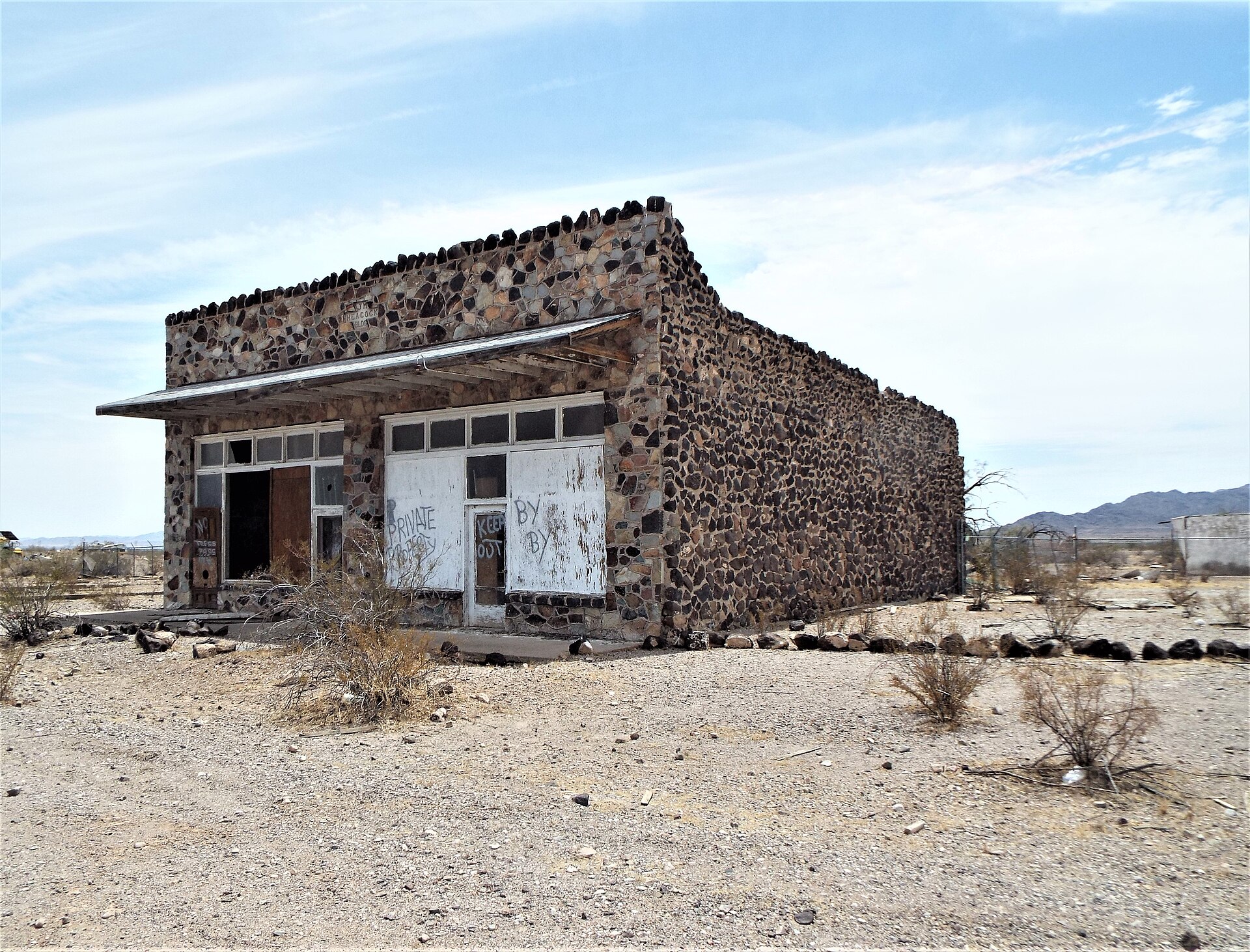
The J. M. Heacock Building today: a single-story commercial building faced entirely in rounded desert fieldstone and mortar, with a shaded storefront porch, boarded windows, and open desert and mountains behind it.Today
The Heacock Building as it stands today — its fieldstone-and-mortar walls intact, the storefront boarded, the desert closing back in around it. The carved “Heacock Bldg” stone is still visible above the porch.

Photograph by Wikipedia user Marine 69-71, via Wikimedia Commons (CC BY-SA 4.0).
SourcesBeyer's Byways, Victorville Daily Press (2021)

The Earp Cottage

Residence

The only permanent home ever owned by lawman Wyatt Earp and his wife Josephine, where they wintered from 1925 to 1928.

History

The trim white-and-blue cottage near the railroad tracks is the only permanent home the legendary lawman Wyatt Earp and his wife Josephine — known as Sadie — ever owned together in a marriage that lasted forty-seven years. For most of their life together the Earps moved constantly, renting hotel rooms and small houses while Wyatt gambled, prospected, and consulted on Hollywood's early Westerns.

The house itself had already survived one disaster. It stood in the nearby town of Calzona until a fire destroyed that settlement in 1922; the little cottage was spared, then moved to Vidal, where the Earps bought it in 1925. From then until 1928 they lived here through the fall, winter, and spring, retreating to Los Angeles only for the hottest months, while Wyatt worked his “Happy Days” mining claims in the Whipple Mountains a few miles north.

Wyatt Earp died in Los Angeles on January 13, 1929, at the age of eighty. A plaque set in a stone-and-cement slab at the cottage records the couple's years here as their “dream-come-true.” The house survives as the single most-visited landmark in Vidal, a quiet desert counterpoint to the gunfight at the O.K. Corral that made its owner famous.

Then & now

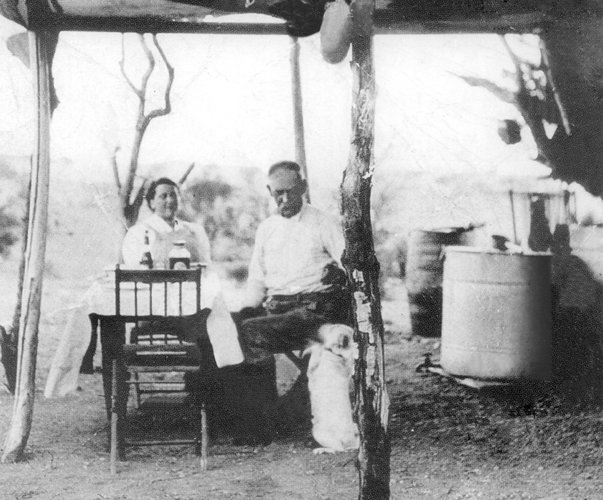
A black-and-white photograph from 1906 showing Wyatt Earp and his wife Josephine seated in the shade of a brush ramada at their desert mining camp, with a water barrel and camp furnishings around them.c. 1906
Wyatt and Josephine Earp at their desert mining camp near Vidal, 1906 — nearly two decades before they bought the cottage. The Earps prospected this country long before they settled in town.

Public domain, via Wikimedia Commons.

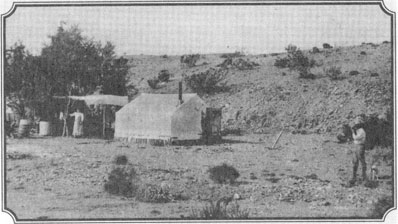
A small, faded black-and-white photograph of the Earp mining camp in the open desert near Vidal, with tents and brush shelters.Early 1900s
Another surviving view of the Earp camp in the desert near Vidal, from the same era of their mining ventures in the Whipple Mountains.

Public domain, via Wikimedia Commons.

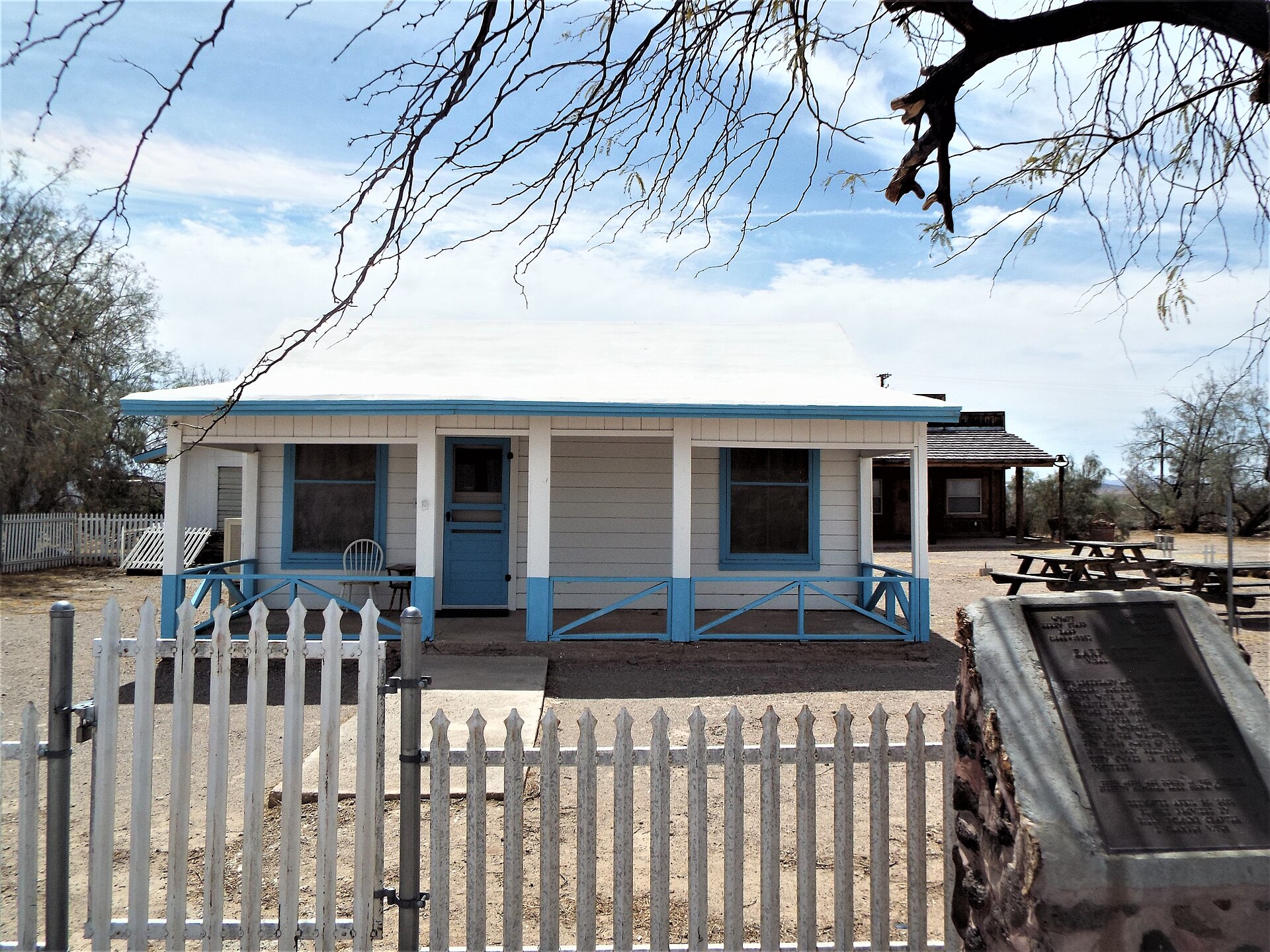
The Earp Cottage today: a small white clapboard house with sky-blue trim and a shaded front porch, set behind a white picket fence, with a bronze memorial plaque on a stone base at right.Today
The cottage today, kept in white and sky-blue behind a picket fence — the commemorative plaque visible at right on its stone-and-cement base.

Photograph by Wikipedia user Marine 69-71, via Wikimedia Commons (CC BY-SA 4.0).
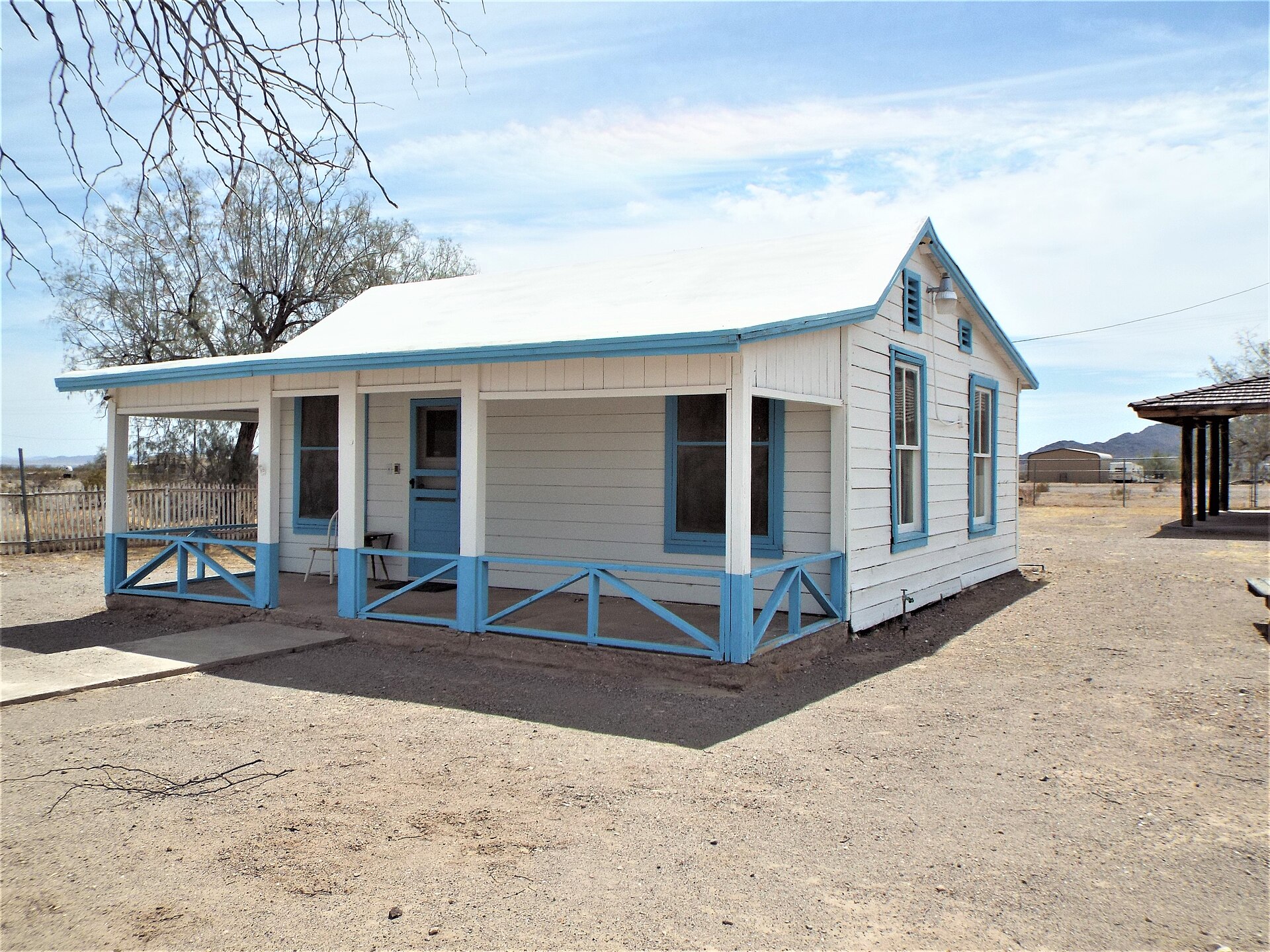
A second present-day view of the Wyatt Earp Cottage in Vidal, California, showing the porch and desert surroundings.Today
A second present-day view of the house near the tracks, the desert and distant ranges beyond.

Photograph by Wikipedia user Marine 69-71, via Wikimedia Commons (CC BY-SA 4.0).
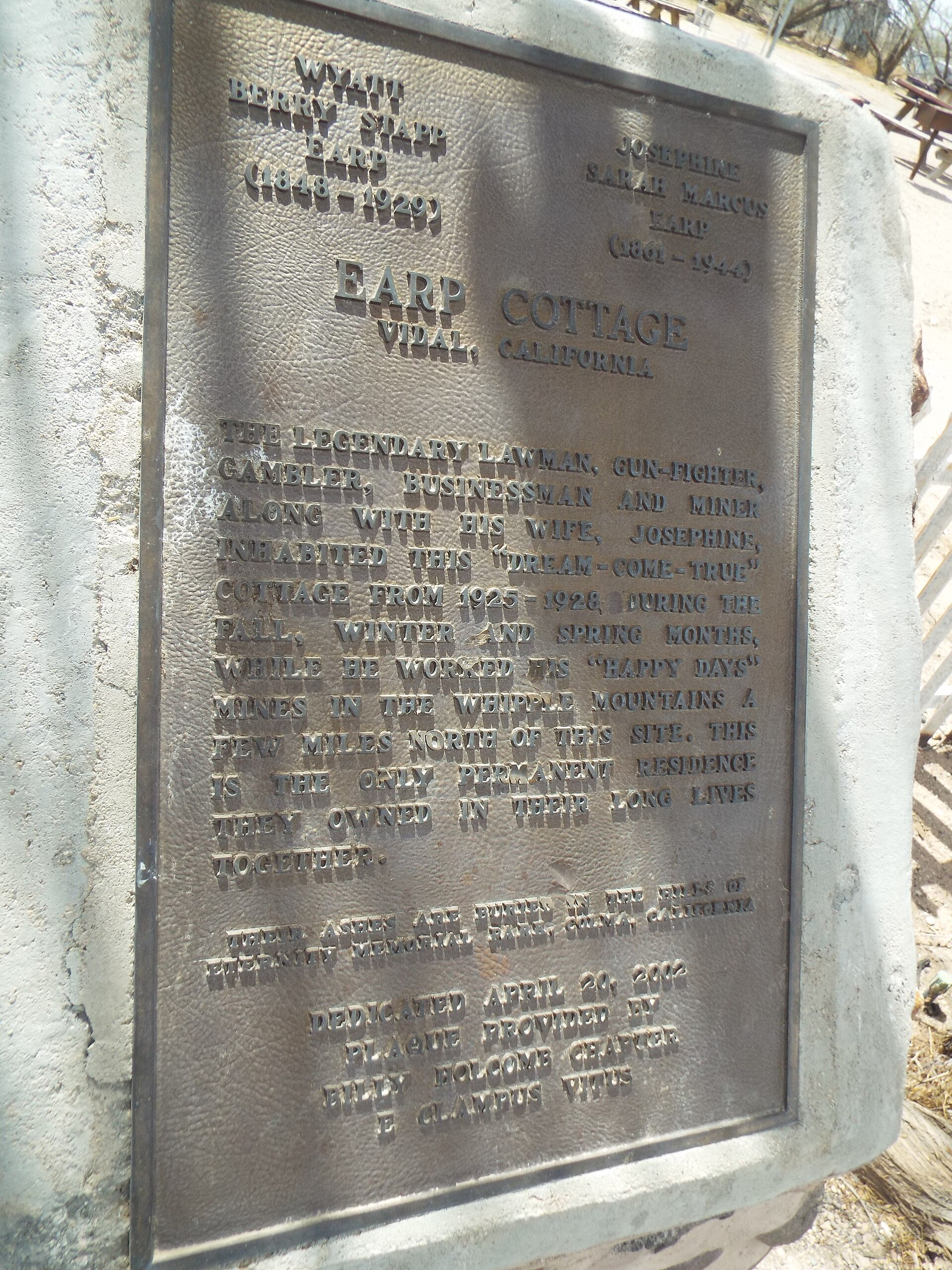
A bronze memorial plaque mounted on a stone-and-cement base in front of the Earp Cottage, commemorating Wyatt and Josephine Earp's residence from 1925 to 1928.Today
The memorial plaque at the cottage, recording the Earps' residence from 1925 to 1928 while Wyatt worked his “Happy Days” mines.

Photograph by Wikipedia user Marine 69-71, via Wikimedia Commons (CC BY-SA 4.0).
SourcesSan Bernardino County, ‘Wyatt Earp’ — Vidal years, cottage, and deputy badge · Beyer's Byways, Victorville Daily Press (2021)

The Solar Lodge Cafe

Roadside cafe

The highway cafe run by the Solar Lodge, preserved on film in Michelangelo Antonioni's Zabriskie Point (1970).

History

At the Vidal crossroad stood a small roadside cafe run by the Solar Lodge, whose Solar Ranch lay in the desert nearby. No detailed written history of the cafe survives — but by good fortune it was captured on film at the end of the 1960s, when Michelangelo Antonioni shot part of his 1970 film Zabriskie Point at Vidal.

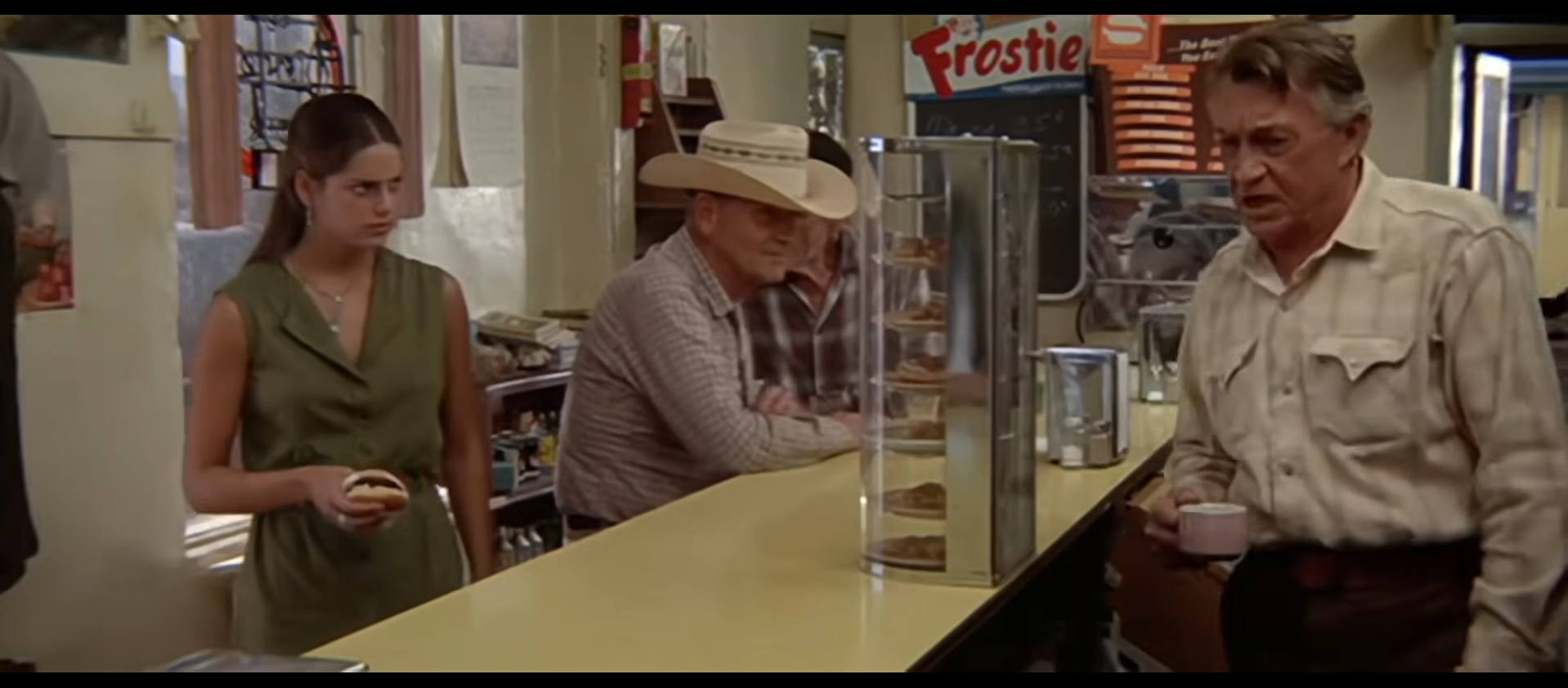
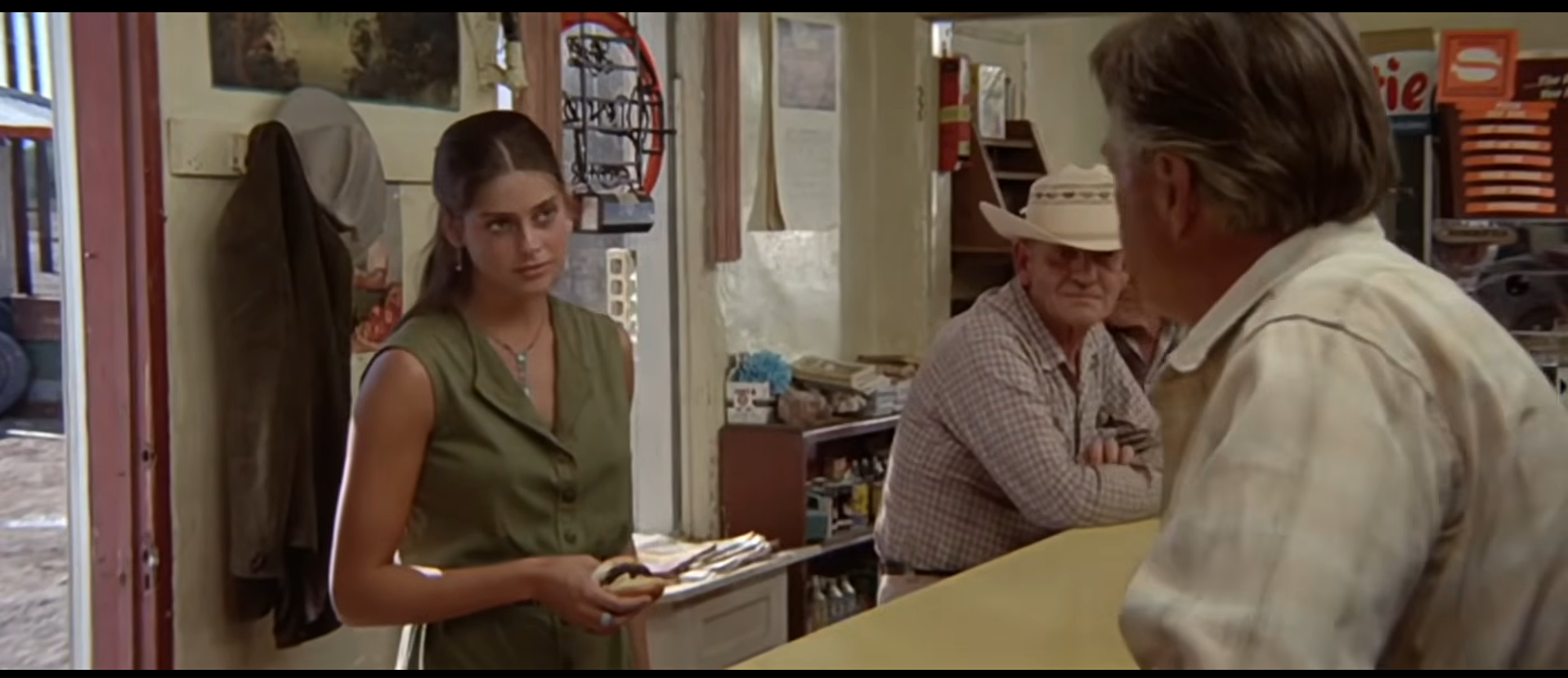
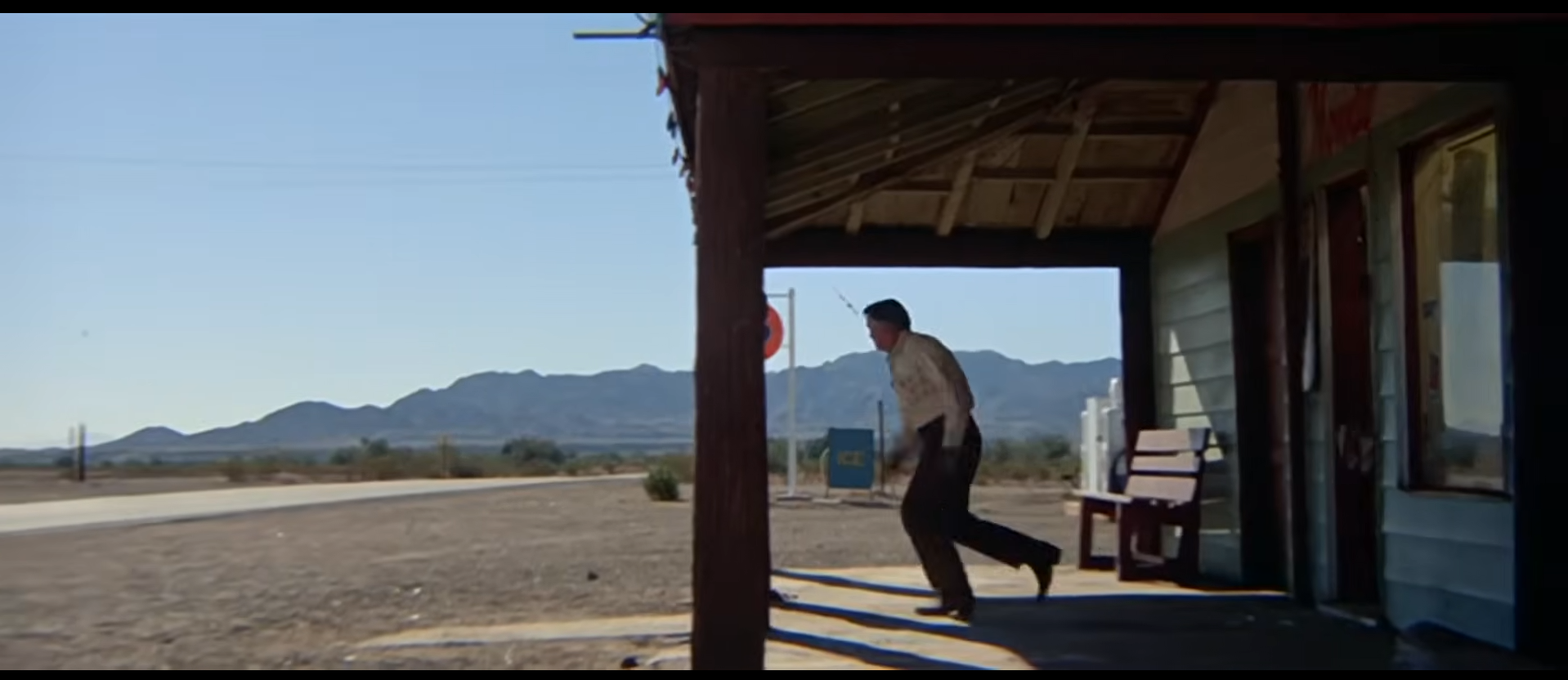
In the film the heroine appears inside the cafe, beneath its “Frostie” and “Squirt” signs, speaking with a gray-haired local named Harold — described as the Solar Lodge motel's only full-time resident, who by the accounts kept with the film died about a year after the shoot. The camera then moves outside to the shaded storefront porch and the townsite strung along the highway.

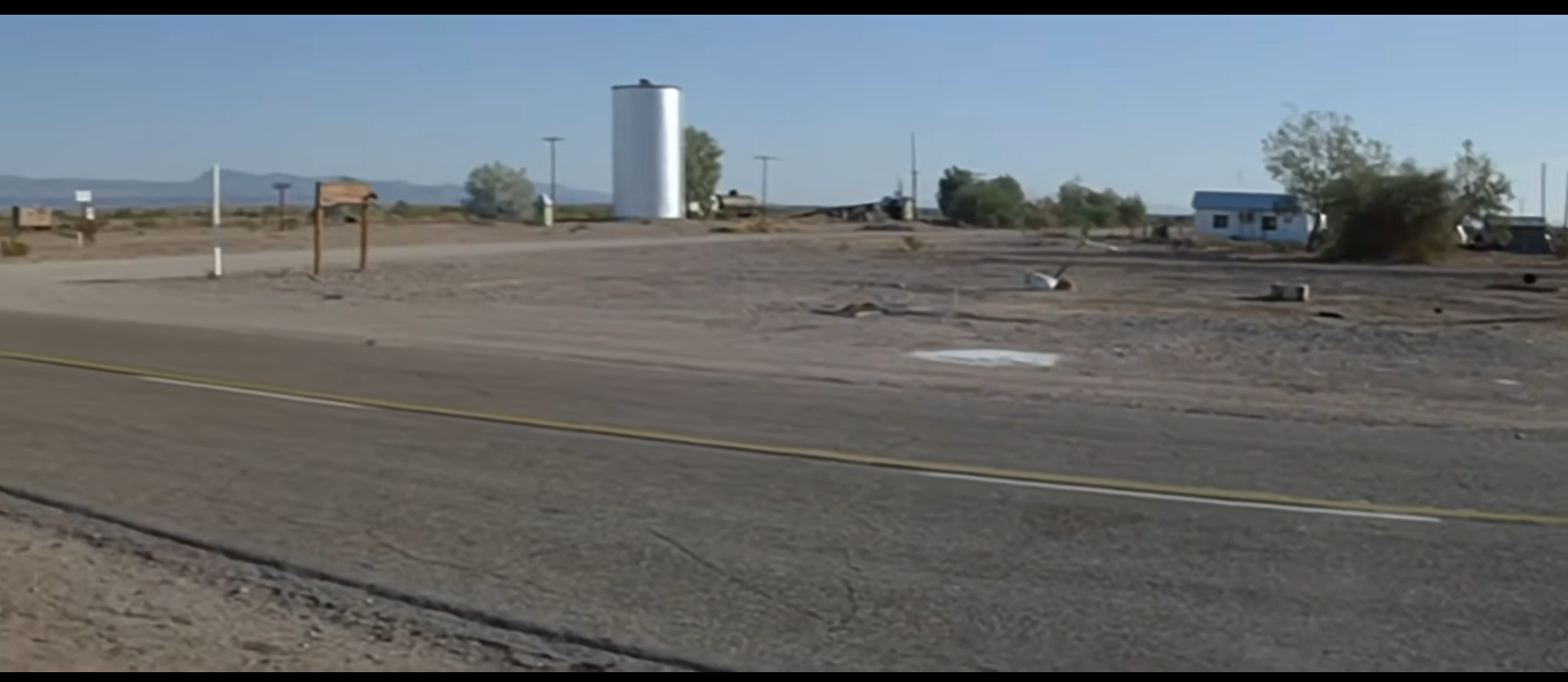
Because so little of Vidal was ever photographed, this sequence is one of the clearest surviving records of the crossroad as a living place — a working cafe, its interior, and the street outside, caught incidentally by a major motion picture. The stills below are drawn from that footage.

See the full entry on Vidal on the Screen
Vidal appears most plainly beginning around 38:11 — the sequence opens inside the Solar Lodge cafe, then moves out to the crossroad.

Vidal on film

A film still from Zabriskie Point inside a desert cafe: a young woman at a yellow counter holding a roll, an older man in a white cowboy hat, and a gray-haired man with a coffee cup, beneath 'Frostie' and 'Squirt' signs.1970, on film
Inside the Solar Lodge cafe, beneath the “Frostie” and “Squirt” signs — the film's heroine at the counter with local men.

Still from Zabriskie Point (1970, dir. Michelangelo Antonioni).

A film still from Zabriskie Point: the young woman in an olive dress speaks across the cafe counter, with the man in the white cowboy hat seated behind her.1970, on film
Another angle within the cafe, the heroine in conversation across the counter.

Still from Zabriskie Point (1970, dir. Michelangelo Antonioni).

A film still from Zabriskie Point: a man bounds off the shaded wooden porch of a desert store into bright daylight, mountains on the horizon behind him.1970, on film
Outside the cafe, a figure springs off the shaded porch into the desert daylight.

Still from Zabriskie Point (1970, dir. Michelangelo Antonioni).

A film still from Zabriskie Point: a wide view of the Vidal townsite along the highway, with a white water tank, a small blue building, and open desert beyond.1970, on film
A wide view of the Vidal townsite along the highway — the water tank, roadside buildings, and open desert beyond.

Still from Zabriskie Point (1970, dir. Michelangelo Antonioni).

SourcesVidal on the Screen — Vidal Historical Society

Holly Cemetery

Burial ground

The small, weathered burial ground of the old town, just across the railroad tracks from the townsite.

History

Holly Cemetery is the resting place of old Vidal — a small, remote burial ground in the desert just across the railroad tracks from the townsite and the Earp Cottage. Like the town it served, it is a quiet, weathered remnant of the mining and ranching booms of the late 19th and early 20th centuries.

It is incredibly small and largely forgotten. Regional records indexed on Find a Grave document only about twenty-three memorials at the site. A simple rusted iron gate marks the entrance, and the graves hold the early desert homesteaders, ranchers, and miners who worked the nearby Whipple Mountains — the ordinary people whose labor built the crossroad that a famous lawman would later call home.

The society is actively gathering photographs and records of the cemetery and those buried there. If you hold images of Holly Cemetery or family records tied to it, we would be grateful to hear from you through the contact page.

Then & now

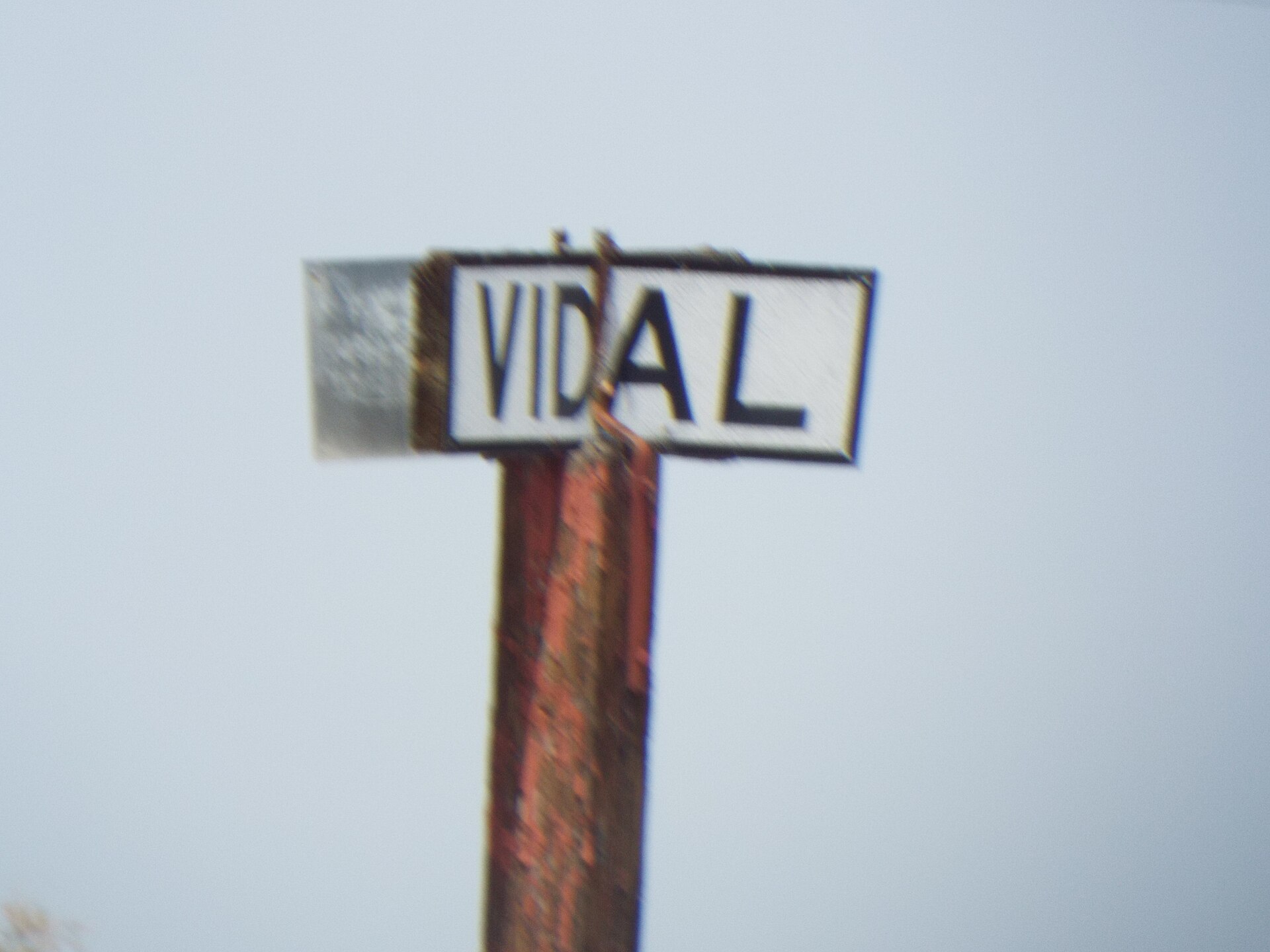
A weathered, bent metal road sign reading 'VIDAL' against a pale desert sky, marking the old crossroad.Today
The bent “VIDAL” sign marking the crossroad off Highway 95. Holly Cemetery lies a short way off, just across the railroad tracks from the old townsite.

Photograph by Wikipedia user Marine 69-71, via Wikimedia Commons (CC BY-SA 4.0).
SourcesBeyer's Byways, Victorville Daily Press (2021) · Find a Grave — Holly Cemetery, San Bernardino County

Know of another Vidal structure — or hold older photographs of the ones gathered here? The society is always adding to the record. Reach out through the contact page.